Octahedral Tilting in Halide Double Perovskites: Disentangling Lone-Pair Chemistry and Geometric Effects
M. Baskurt,
E. Fransson,
M. Lindvik,
P. Erhart,
and
J. Wiktor
Faraday Discussions ASAP, N/A
(2026)
arXiv:2605.19414
doi: 10.1039/d6fd00014b
Download PDF
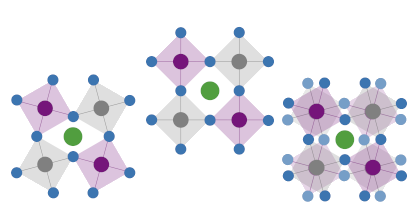
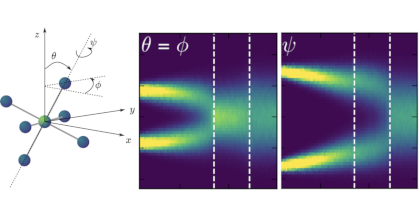
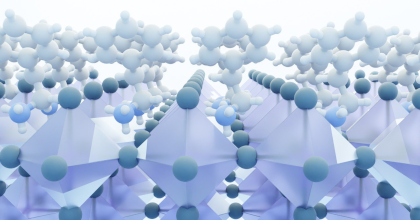
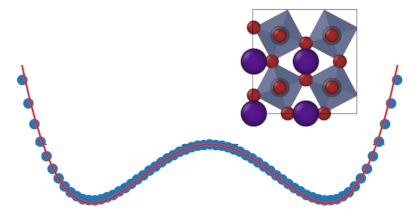
Halide double perovskites (HDPs) have emerged as promising alternatives to their lead-based counterparts. However, their structural dynamics is less explored than that of conventional halide perovskites. In this work, we investigate octahedral tilting at 0 K and the relative stability of tetragonal and cubic phases of a set of 57 halide double perovskites (HDPs). By combining structural and energetic descriptors with simple geometric metrics, we identify the main trends controlling the stabilization of one-tilt tetragonal phases across this family. We find that both the magnitude of the tilt angles and the energetic preference for tilted phases correlate primarily with the Goldschmidt tolerance factor t. The presence of stereochemically active lone-pair cations also correlates with enhanced tilting; however, this trend largely reflects that lone-pair chemistries in HDPs occur together with ionic sizes that shift t away from unity. Consistent with this picture, we observe several compounds without lone pairs that nonetheless exhibit strong octahedral tilting. Finally, using machine-learned interatomic potentials, we connect the 0 K tilting energetics to finite-temperature behavior: compounds with more strongly stabilized tilt phases exhibit higher transition temperatures, and phonon spectra at 350 K reveal soft and broad modes that are consistent with the trends in tolerance factors, tilt angles, and tilt energies at 0 K. Our results provide a systematic reference for structure-stability relationships in HDPs and clarify when lone-pair chemistry is correlated with, rather than the primary cause of, octahedral tilting.