Light-Matter Interaction and Hot Carriers: From Weak to Strong Coupling
J. Fojt
Doctoral Thesis
(2025)
url: https://research.chalmers.se/publication/548675
When an object is illuminated, it can both scatter and absorb the incoming light. Shortly after absorption, hot carriers, which are electrons and holes with non-thermal energies, form in the material. Scattering, absorption and the formation of hot carriers are fundamental for technologies such as sensing, photovoltaics, and photocatalysis. One way toward better devices is the confinement of light to traditional cavities or metallic nanoparticles. This increases the interaction strength, or coupling, between light and matter. A recent development is the realization of strong coupling - interaction strengths so large that hybrid light-matter states with new properties emerge. In practice, the design space of materials is large, and computational methods can serve as a guide for their rational design, both in the weak and strong coupling regimes.
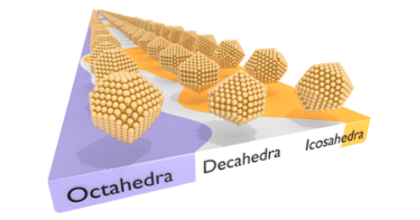
As part of this thesis, I have developed an analysis software. I use it to show that locally alloying the surface of noble metal nanoparticles with less noble elements is a possible way to control the energies of hot holes. I also show that the probability of generating one hot carrier in the nanoparticle and its opposite carrier in a nearby molecule sensitively and non-monotonically depends on adsorption site and distance, providing valuable insights into the understanding of hot-carrier devices.
In the context of strong coupling, I show that by coupling the nanoparticle to an optical cavity, the absorption spectrum can be tuned to be more optimal for hot-carrier generation. I also derive a computationally efficient and nearly-quantitative model for optical spectra of strongly coupled nanoparticle-molecule assemblies, based on dipolar coupling between moieties. Finally, I implement efficient machine learning models for potential energy surfaces and dipole moments, and apply these to study chemical kinetics under strong coupling conditions.